|
|
|||||||||||||||||||||||||||||||||||||||||||||||||||||||||||||||||||||||||||||||||
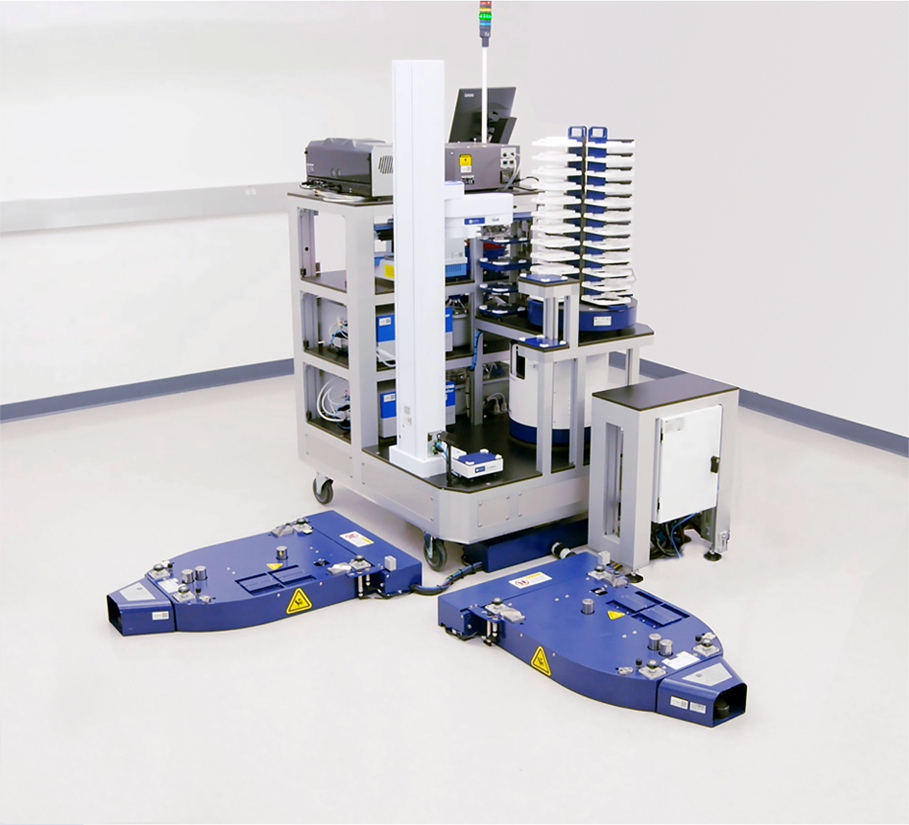
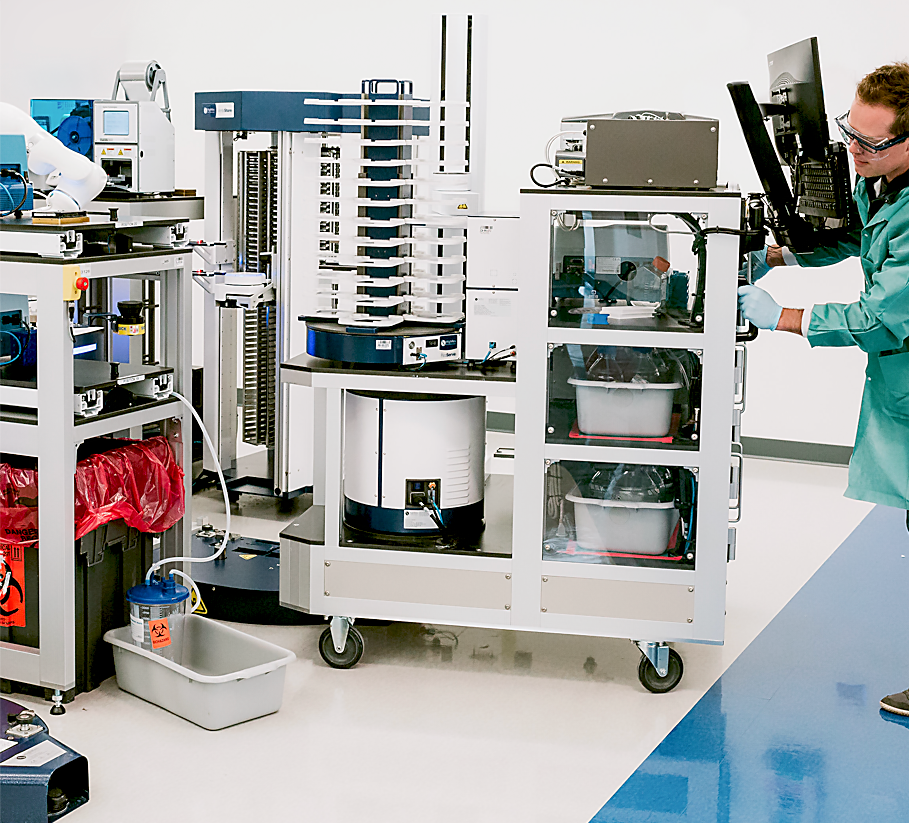
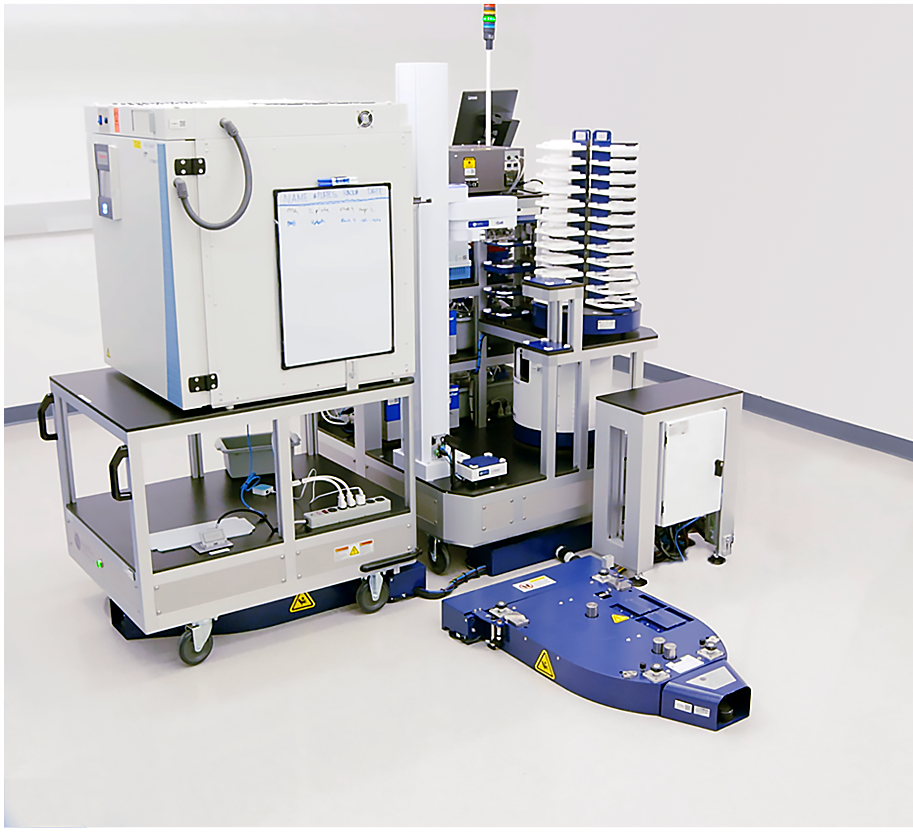
This system is a 9-sided HighRes MicroStar configured for direct integration with an ambient plate store and acoustic dispensing. This larger system would typically form the hub of a compound management group’s operations. Equipped with two acoustic dispenser units, it is capable of generating large numbers of "assay-ready" plates, for use by downstream screening customers. Accessory instruments, including heat sealers, heat seal removers and plate centrifuges guarantee the integrity of both the source plates and the completed destination plates.
System Key Advantages | Cellario Protocol Design | Options for Data Integration | Cellario Key Advantages
Reliable - Direct integration with the ambient plate store allows for uninterrupted processing of larger batches of compound with no need for manual intervention
Reconfigurable - As customer formats alter, modify the system’s capabilities by using the MicroDocks to exchange the acoustic dispenser carts for classical liquid handler carts to enable a higher volume range to be provided for
Efficient - Use the docking technology to implement "hot spare" carts. These carts, fitted with an identical device and methods, can be swapped into the system mid-run to replace a failed device and allow uninterrupted processing.
Cellario Protocol DesignCellario is HighRes Biosolutions’ dynamic scheduling software package. We use it to control all our integrated systems, from the compact NanoCell to larger multi-robot MicroStar systems.
Starting from the hardware layout for this 9-sided MicroStar, we can build a Cellario protocol to see how each of the instruments on the system could be used.
The screen shots to the right show a simple source-to-destination plate replication protocol. The source plates are centrifuged and de-sealed prior to the acoustic liquid transfer, performed on a pair of pooled acoustic dispensing devices. The destination plates are cleaned with the MicroBlast before the liquid transfer. Post transfer, destination plates are heat sealed and then labelled before being returned to storage.
Key Design Elements:
|
Cellario is designed to support a wide range of upstream and downstream data integration requirements, essential for Compound Management applications.
Upstream - Orders are created against specific Protocol Designs and used to run the systemNo Data Integration / Ad-Hoc Processing - Cellario incorporates an Order Designer GUI, allowing users to manually create orders
In-House/Commercial Sample Management Software - Cellario supports the use of external applications to generate orders by inserting records into the Cellario Oracle database via PL/SQL Stored Procedures API. For systems with online plate or tube rack storage, API level ordering can be used to request labware by external barcode from a persistent inventory.
Error and General Notifications - Receive mid-run notifications of system errors and warnings or general prompts for user interaction, for example to refill consumables or empty waste. Compatible with email or web services.
Plate-Based Information - Cellario can automatically output source/destination barcode mapping. Custom SQL queries can also be applied to extract specific information. Manual, file-based and direct database approaches are all supported.
Well-Based Information - Cellario can be configured to format and then output liquid handler log-files to specific locations, to enable detailed well-level information to be integrated into the downstream result-analysis phase
Error Recovery - Recover your active order and all data to the point of failure, even after whole system power outage. Critical instruments (such as the acoustic dispensers) can be fitted with a UPS in the MicroCart to ensure any started operations will complete. Configurable email notifications keep you informed of any errors or warnings.
Device Pooling - Cellario supports a wide range of pooling options for all classes of device, even complex liquid handlers. Strategies including “first available”, “round robin” and “fail over” can be defined during protocol design. Instrument pools can then be dynamically adjusted while orders are live on the system. Units can be temporarily retired to tend to blocked tips or for consumable exchange. “Hot spare” instruments that were not even in the original protocol design can be docked and added to a pool using Cellario’s new run-time editing feature.
Scripting Components - Use Cellario’s Process Executor operation to run custom scripting components. With multiple languages supported (for example, Java, VB or .NET), scripts have access to a number of run time variables including plate number and barcode. On this system a script could be used to parse output files from the acoustic dispensers, and stream the data directly into the customer’s downstream data analysis workflow.
Device Drivers - Primarily used by Cellario for automated processing, they can also be used by operators in off-line mode, providing a consistent user interface across many device types. Our device drivers are continually developed to ensure systems run as efficiently as possible – for example, modifying the Labcyte Echo driver to re-use stored plate survey data when a source plate is re-accessed. For a system with online plate storage and frequent source plate re-use, this configurable option can cut around 1 minute off every plate transfer operation and also reduce source plate exposure times.